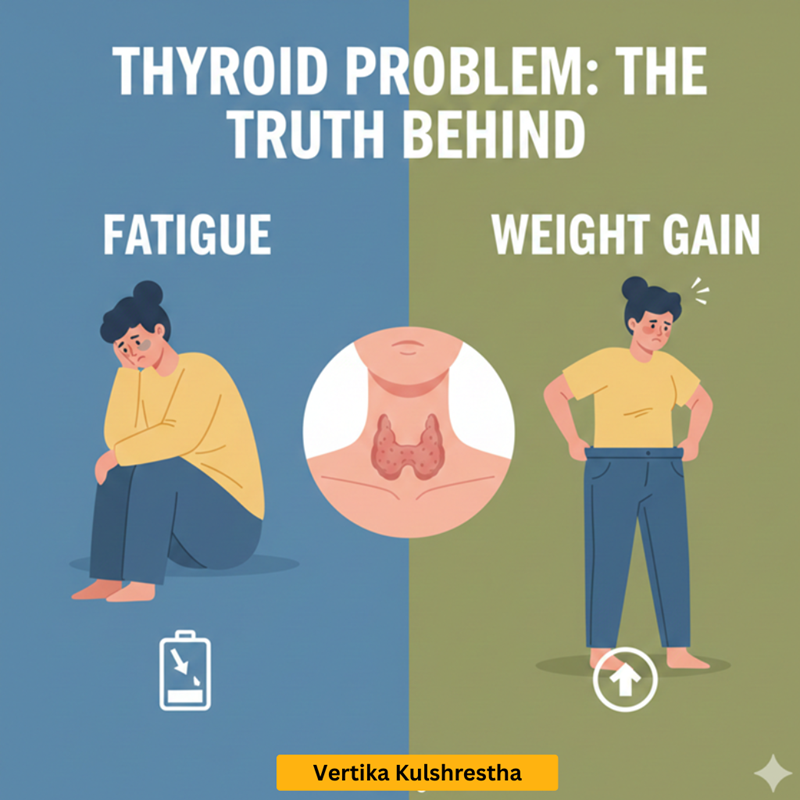
Thyroid Problem: The Truth Behind Fatigue and Weight Gain
The thyroid is a small, butterfly-shaped gland located in your neck, and despite its size, it acts as your body's master controller. This gland produces hormones that regulate your entire metabolism, energy levels, and body temperature.
Today, due to factors like stress and changes in lifestyle, Thyroid problems have become very common. Many people ignore the early Signs of low thyroid function (like persistent tiredness), simply attributing them to stress. Let's understand what thyroid disease truly is and what must be done for its treatment.
The Two Main Thyroid Types and Their Symptoms
Thyroid problems primarily occur in two ways, and they affect the body in completely opposite fashions:
1. Hypothyroidism (Underactive Thyroid)
This is the most common issue. When the gland does not produce enough hormones, the body begins to slow down. This is often known as the Signs of low thyroid function.
Key Symptoms:
Sudden and unexplained weight gain (without overeating).
Feeling persistent Thyroid fatigue and hair loss.
Feeling excessively cold (even when the weather is warm).
Chronic constipation.
Dry skin and rapid hair loss.
2. Hyperthyroidism – When Your Thyroid Starts Working Too Hard
Think of your thyroid as the body’s speed controller.
Now imagine if that controller gets stuck on “high.”
That’s what happens in hyperthyroidism—the gland makes too much thyroid hormone, and suddenly your body starts moving faster than it should.
What this usually feels like:
- You’re losing weight without trying:
You eat normally, maybe even more than usual, but the weight keeps slipping away. - Your heart feels like it's racing:
You might feel jumpy, uneasy, or anxious for no real reason. Sometimes it feels like your heart is running a sprint while you're just sitting still. - You feel hot all the time:
Everyone else is comfortable, and you’re the only one sweating or searching for a fan. Excessive sweating and constant heat are very common with an overactive thyroid.
Trouble sleeping and restlessness.
Diet and Lifestyle for Control
While medication treats the condition, improving your lifestyle is equally important for effective Thyroid Control Tips at Home.
Nutritional Focus – Feeding Your Thyroid the Right Way
Your thyroid can’t make hormones out of thin air. It needs specific nutrients—especially Iodine and Selenium.
A simple way to support it? Add everyday foods like iodized salt, eggs, fish, and a few Brazil nuts to your meals. These are among the best foods for thyroid health, and they help your gland function smoothly.
Fiber & Hydration – The Constipation Fix
Thyroid issues often slow down the digestive system.
If constipation is bothering you, two things really help:
- Drink enough water throughout the day
- Add fiber-rich foods to your diet
This combination keeps your gut moving and makes you feel lighter.
Reducing Stress – Calming the Hormone Storm
Stress is one of the sneakiest things that can throw your thyroid hormones off balance.
Even a few minutes of yoga, deep breathing, or meditation each day can calm your system and help stabilize your hormones naturally.
Exercise – A Gentle Boost for Your Metabolism
You don’t need intense workouts.
Simple routines like brisk walking, jogging, or light cardio can do wonders.
Regular movement not only supports your metabolism but also fits perfectly into a Thyroid Diet Plan for Weight Loss, making it easier to manage your symptoms.
Doctor’s Corner – Testing & Treatment
How Do We Diagnose Thyroid Problems?
It’s simpler than most people think.
A basic blood test—called the TSH (Thyroid Stimulating Hormone) test—is usually the first step.
This test tells your doctor how well your thyroid is working and helps decide the right treatment path for you.
This test tells your doctor how efficiently your gland is working.
Treatment: The Thyroid Symptoms Causes and Treatment plan is always determined by your doctor. For Hypothyroidism symptoms and treatment, a small hormone replacement pill is taken daily on an empty stomach.
Medication Rule: Take your medication at the exact same time every morning, and wait at least 30 to 60 minutes before having tea, coffee, or breakfast, to ensure complete absorption.
Dr. Vertika Kulshrestha - A Thyroid problem is manageable. By knowing the early Thyroid Symptoms Causes and Treatment and adhering to your doctor's advice, you can live a normal and healthy life. Prioritize regular check-ups