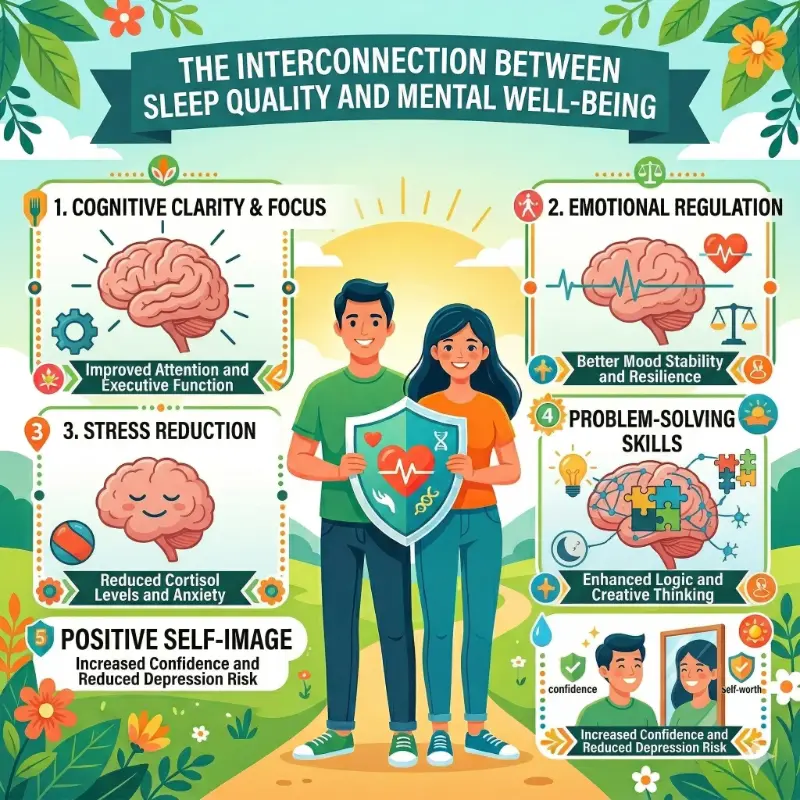
The Interconnection Between Sleep Quality and Mental Well-being
Introduction In our hyper-connected world, sleep is often the first thing we sacrifice. However, sleep is not merely "rest time" for the body; it is a critical neurological process. Modern research shows a bidirectional link between sleep and mental health—poor sleep can trigger mental health issues, and anxiety or depression can make it harder to sleep.
The Stages of Sleep and Brain Function During REM (Rapid Eye Movement) sleep, the brain processes emotional information. Without sufficient REM sleep, the brain struggles to consolidate positive memories and manage stress, leading to increased irritability and emotional instability.
The Physical Consequences of Sleep Deprivation
- Cognitive Decline: Reduced focus, poor memory, and slower reaction times.
- Hormonal Imbalance: Sleep loss affects hunger hormones (Leptin and Ghrelin), often leading to weight gain.
- Weakened Immunity: The body produces cytokines (proteins that fight infection) primarily during sleep.
Tips for Better Sleep Hygiene
- Consistency is Key: Go to bed and wake up at the same time every day, even on weekends.
- Digital Detox: Turn off blue-light-emitting devices (phones, tablets) at least 60 minutes before bed.
- Optimize Your Environment: Ensure your bedroom is dark, cool, and quiet.
- Mindfulness Practices: Light stretching or meditation before bed can signal to your nervous system that it is time to wind down.
Conclusion Prioritizing sleep is one of the best investments you can make for your mental and physical health. If chronic insomnia persists, it is vital to seek professional guidance to rule out underlying medical conditions.