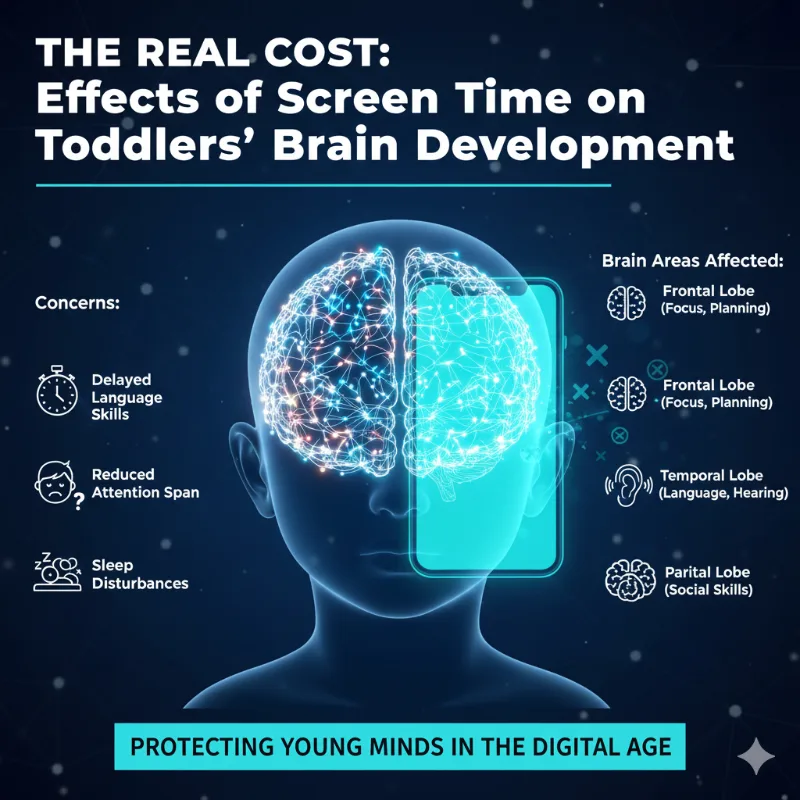
The Real Cost: Effects of Screen Time on Toddlers’ Brain Development
The toddler stage—especially between 2 to 3 years—is a magical period where your child’s brain is building the foundations for language, attention, and emotional control. However, when screen time begins to take over, it quietly disrupts this process. Understanding the Effects of Screen Time on Toddlers’ Brain can help you protect your child’s future.
1. How Excessive Screen Time Impacts a Toddler’s Brain
Language Development Delay: Toddlers learn by watching your expressions and engaging in back-and-forth conversations. Screens talk at children, but toddlers learn best when someone talks with them. This is a leading cause of Screen Time and Language Delay in Children.
Weakened Attention Span: High-paced digital content trains the brain to expect constant excitement. This makes real-world activities, like playing with blocks or listening to stories, feel "boring" in comparison.
Sleep Problems: Blue light suppresses melatonin. Screen Time and Sleep Problems in Toddlers often lead to difficulty falling asleep and frequent night waking, which affects growth and mood.
2. AAP Screen Time Limits (Ages 2–5)
The American Academy of Pediatrics recommends: No more than 1 hour per day of high-quality, non-interactive screen time. Consistency is key to healthy development.
3. Practical "Do’s" for Parents
Co-Watch and Talk: Sit with your child. Ask questions and explain what’s happening on the screen to connect it to real life.
Choose "Slow" Content: Pick calm, educational shows rather than loud, fast-paced ones that overstimulate the brain.
Prioritize Real Play: Ensure they get plenty of outdoor time, drawing, and storytelling before any screen is turned on.
4. Important "Don’ts" to Remember
No Screens as Pacifiers: Using tablets to stop tantrums prevents children from learning how to regulate their own emotions.
No Background Screens: A TV playing in the background reduces parent-child conversation and distracts from healthy play.
No Screens Before Bed: Turn off all devices at least one hour before bedtime and never keep them in the bedroom.
Final Thought: Screens will always be around, but your child’s developing brain only gets one chance. By creating healthy boundaries today, you ensure better learning, focus, and behavior tomorrow.
Dr. Vertika Kulshrestha: Healthy limits are the best gift you can give your child's developing mind. Build human connections first, and let technology be a very small part of their world.