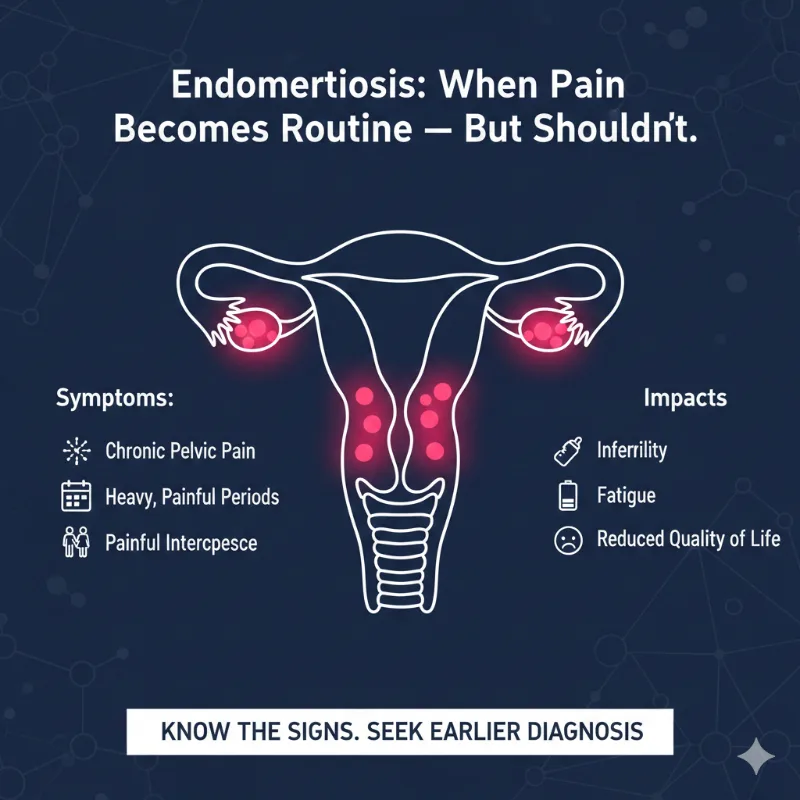
Endometriosis: When Pain Becomes Routine — But Shouldn’t
Many women grow up believing pain is part of being a woman. After hearing “it’s normal” enough times, many stop talking about it. But persistent pain is never normal. Endometriosis affects nearly 10% of women worldwide, yet it often goes undiagnosed for years. It is not just a hormone problem; it is a condition driven by ongoing inflammation and immune system imbalance.
1. What Is Endometriosis Really Doing Inside the Body?
In endometriosis, tissue similar to the uterine lining grows outside the uterus—on ovaries, pelvic ligaments, or the bowel. This tissue still reacts to hormones, swelling and bleeding each cycle.
The Difference: There is no way for this blood to leave the body. The trapped blood irritates surrounding tissues, triggering inflammation month after month.
2. Why the Pain Feels Constant
Many women ask why the pain doesn’t disappear once periods end. The answer lies in chronic inflammation:
The Immune Response: The body sees the trapped tissue as a threat. Immune cells rush in but cannot resolve the issue.
Pain Sensitivity: Prostaglandins and cytokines flood the pelvis, irritating nerves and increasing swelling.
Immune Dysfunction: This explains why endometriosis is often linked with fatigue, digestive inflammation, and thyroid imbalances.
3. Scar Tissue and Adhesions
Repeated inflammation causes the body to form scar tissue. Over time, these become adhesions, binding organs together. This leads to:
Ovaries sticking to the bowel.
Deep, pulling pain during movement or intimacy.
Digestive bloating and fertility difficulties.
4. Treating Endometriosis: Calming the Inflammation
Painkillers alone cannot control endometriosis long-term. Treatment must focus on reducing inflammation and regulating the immune response:
Hormonal Management: Reducing estrogen levels helps slow tissue growth and decreases internal bleeding, giving tissues time to recover.
Nutrition as Therapy: An anti-inflammatory diet rich in Omega-3, antioxidants, and fiber helps stabilize immune activity and lowers flare frequency.
Surgical Treatment: Laparoscopic surgery may be required to remove lesions and scar buildup, breaking the inflammation–pain cycle.
5. Seeing Endometriosis for What It Is
Endometriosis pain is real, physical, and measurable. It reflects the body responding to internal injury—not weakness or imagination. With early recognition, women can experience better pain control and improved quality of life.
The Key Takeaway: Endometriosis is not something to “push through” and it is not a normal part of periods. When treated as a condition of chronic inflammation and immune dysfunction, care becomes more effective.
Dr. Vertika Kulshrestha: This understanding supports better chronic pelvic pain syndrome (CPPS) treatment options. Listening to your pain is the first step toward healing. Don't ignore what your body is trying to tell you.